


At that age, some of the permanent teeth have already erupted but there are still many temporary teeth in the mouth. This is referred to as a “mixed dentition”. This is the ideal age to evaluate children’s dentition. The different procedures that may be indicated at that developmental period, fall into three main categories:
Observation
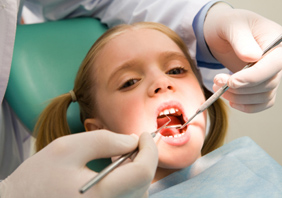
Upon initial evaluation, if no major problems are detected, the child may be placed under “observation” and seen ever 12 to 18 months to monitor the eruption of his/her dentition. Appropriate recommendations will be made when indicated. The orthodontist may recommend taking a panoramic radiograph to have a better overall view of the developing dentition and to insure that all the teeth are present and are developing normally, evaluate the direction of eruption of the permanent teeth and the space available for their eruption in the mouth. This supervision may allow anticipating and minimizing the appearance of certain problems.
Prevention
When it has been determined that some problems are developing, certain preventive measures may be undertaken to prevent these conditions from worsening. For instance, the orthodontist may recommend that, if present, caries between the teeth be repaired by your dentist in order to avoid loss of tooth structure and space loss in the dental arch.
Sometimes, reducing the width of some temporary teeth or extracting some of them may facilitate the eruption of the underlying permanent teeth and minimize dental crowding problems. The use of simple appliances, such as space maintainers, may allow preserving the space available in the dental arches during the eruption of the teeth and preventing worse eruption problems from developing.
Interception (phase 1)
 When certain problems are detected during the mixed dentition stage, it may be necessary to do a “preliminary” treatment to prevent the condition from worsening and causing damage to the teeth and their supporting structure (gingiva and bone) or to affect jaw growth.
Here are a few examples of problems hat require and benefit from an early “interception” intervention at a younger age:
- Posterior crossbite: important width discrepancy (imbalance) of the jaws that is frequently causing a lower jaw deviation (asymmetry)
- Anterior crossbite: upper front teeth biting behind the lower ones (anterior crossbite). This may cause tooth wear and a lo
- Open bite: upper front teeth that are not touching the lower ones (gap), causing functional problems (masticatory, speech and phonetics)
- Significant space loss after loosing a deciduous or baby tooth and migration of the remaining teeth. It may be indicated to regain the lost space to allow proper eruption of the permanent teeth
- Severely displaced teeth causing esthetic or functional problems, tooth wear and gingival recession. An early treatment may be correct a specific aspect of the occlusion and eliminate this problem
- Chronic digit sucking habit causing tooth displacement and jaw deformationInterferences between the teeth causing premature tooth wear, jaw deviation and asymmetry.
Certain types of intervention are referred to as “Phase 1” or “Preliminary” treatment because they must, most of the time, be followed by other corrections later. Early treatment does not guaranty that all the permanent teeth will erupt normally and that further treatment will not be indicated when the permanent dentition is completed. These early interventions cans however make the second phase of treatment simpler, faster and less costly. It can allow the orthodontist to better harness the patient’s growth potential to correct skeletal imbalances between the jaws without surgery, to reduce the need for extractions of permanent teeth, to stop digit sucking habits and minimize the chance of having teeth that do not erupt impacted teeth).
As we monitor your child’s dental development, we will be able to explain the different treatment steps necessary to insure that he/she eventually ends up with a great esthetic and functional occlusion.
Serial extractions
Serial extractions are preventive and interceptive measures consisting in strategically removing certain deciduous (temporary) teeth when the space deficiency in the dental arches is severe. If the child is seen at anearly age (7 or 8 years of age), a panoramic radiograph and a clinical examination will help determine if the space available for the unerupted permanent teeth is sufficient and if their direction of eruption is adequate.
- If significant space deficiency or other problems are detected on the radiograph, Dr. Lemay will prescribe the extraction of certain deciduous teeth to your dentist.
- This procedure allows for a redistribution of the available space to the underlying permanent teeth that have an abnormal path of eruption because of a lack of space.
- The extractions may be indicated in one or both arches an are usually spread over many years.
The child will then be evaluated every 12 to 18 months to monitor the evolution of the dental eruption following the serial extractions. Depending on the case, other extractions may be needed. Since this procedure is indicated mainly when the lack of available space is severe, it must be expected that, even if temporary teeth are removed, the permanent teeth will not erupt in a normal position and orthodontic corrections will still be necessary to obtain an esthetic and functional occlusion


